For many students in Pakistan, studying abroad is more than just an academic goal — it’s a dream that can change their future. An international degree can open doors to better career opportunities, global exposure, and personal growth.
But the process often feels confusing at first. Questions like Which country should I choose? What documents do I need? How do I apply for a visa? are common for students planning to study overseas.
The good news is that thousands of Pakistani students successfully begin their study abroad journey every year. With the right information and proper planning, you can do the same.
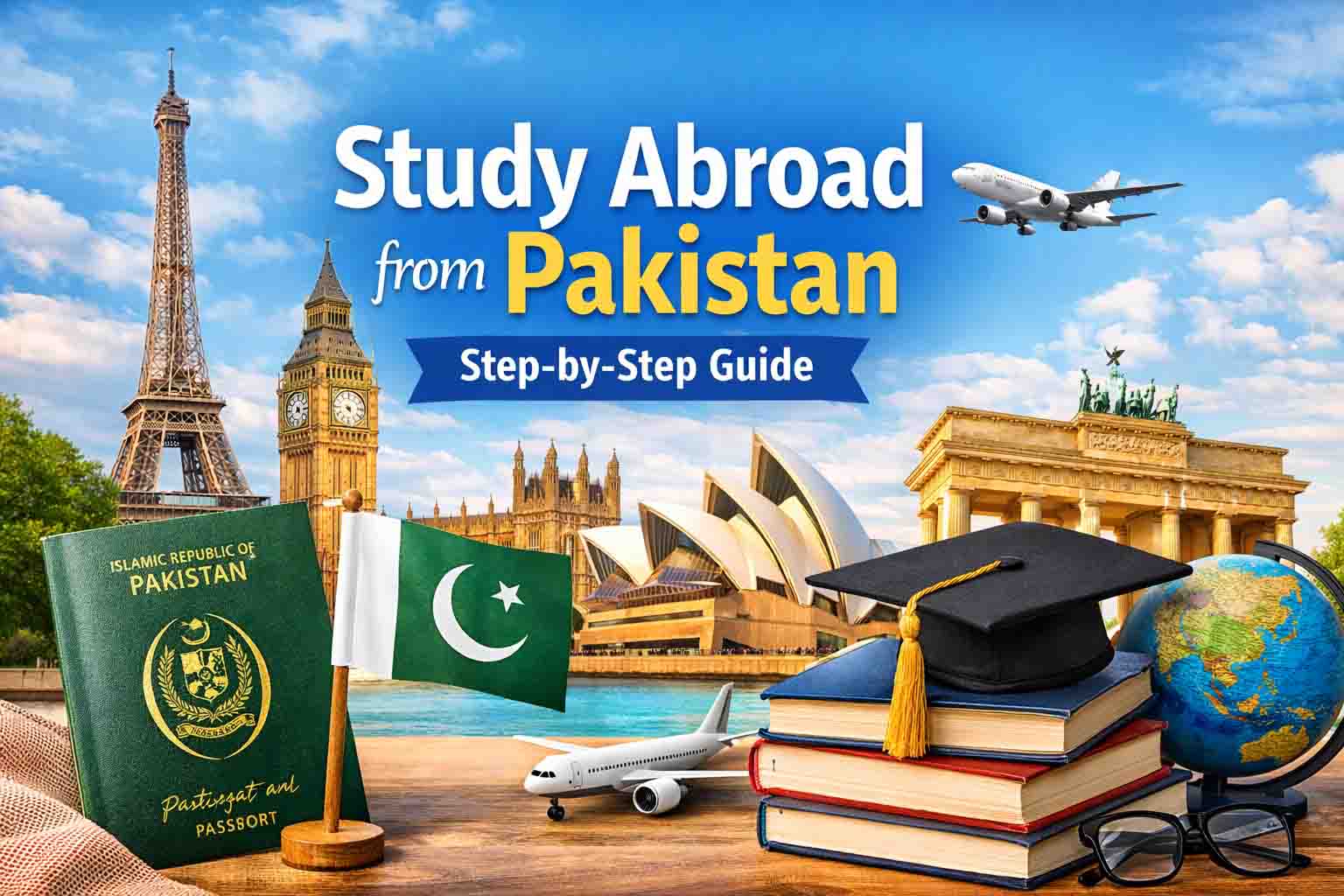
This guide explains the complete step-by-step process for studying abroad from Pakistan, from choosing a destination to getting your student visa approved.
1. Understand Your Goals
Before choosing a country or university, take some time to think about why you want to study abroad.
Different students have different reasons. Some want access to better education, while others are interested in international career opportunities.
Ask yourself a few important questions:
-
What career field am I interested in?
-
Which countries offer strong programs in that field?
-
Do I want to work abroad after graduation?
-
What budget can I realistically afford?
Having clear answers will make the rest of the process much easier.
2. Choose the Right Country
The next step is selecting a study destination. Pakistani students currently prefer several countries because of their education systems and work opportunities.
Popular Destinations for Pakistani Students
-
Canada
-
United Kingdom
-
Australia
-
Germany
-
Turkey
-
Malaysia
-
China
Each country has its own advantages. For example, Germany is known for affordable education, while Canada offers strong immigration pathways after graduation.
Things to Consider Before Choosing
When selecting a country, think about:
-
Tuition fees
-
Cost of living
-
Scholarship opportunities
-
Language requirements
-
Student visa approval rate
-
Post-study work options
Making a well-researched decision can save both time and money.
3. Select a Course and University
Choosing the right program is one of the most important steps in your study abroad journey.
Your selected course should ideally match your previous academic background and future career plans.
Tips for Choosing a Course
-
Look for fields with strong job demand
-
Choose a program aligned with your previous studies
-
Research career prospects after graduation
Tips for Choosing a University
When comparing universities, consider:
-
Global ranking
-
Tuition fees
-
Accreditation
-
Graduate employment rate
-
Availability of scholarships
University websites usually provide detailed information about programs and admission requirements.
4. Check Admission Requirements
Every university has its own admission criteria, but some requirements are common across most institutions.
Common Documents Required
-
Academic transcripts
-
Passport copy
-
Statement of Purpose (SOP)
-
Recommendation letters
-
Updated CV (for some programs)
Most universities also require proof of English proficiency.
Common English Tests
Students may need to take one of the following exams:
-
IELTS
-
TOEFL
-
PTE Academic
Some universities waive English tests if previous education was completed in English.
5. Prepare Your Documents
Once you know the admission requirements, start preparing your documents early.
Essential Documents
-
Valid passport
-
Academic certificates
-
Transcripts
-
English test results
-
Statement of Purpose
-
Recommendation letters
-
Updated CV
-
Passport-size photographs
Keep digital copies of all documents properly organized because most applications are submitted online.
6. Apply to Universities
Most international universities accept applications through their online admission portals.
Basic Application Process
-
Create an account on the university website
-
Complete the application form
-
Upload required documents
-
Pay the application fee if required
-
Submit your application
Applying to multiple universities increases your chances of acceptance.
7. Receive the Offer Letter
If your application is successful, the university will issue an offer letter.
There are two common types:
Conditional Offer
You still need to meet certain requirements, such as submitting final results or English test scores.
Unconditional Offer
You have met all the requirements and are officially accepted.
After receiving the offer, the next step is preparing for the visa process.
8. Arrange Financial Proof
Most countries require students to show proof that they can afford their education and living expenses.
Financial Documents May Include
-
Bank statements
-
Sponsor letter
-
Scholarship confirmation
-
Financial affidavit
Financial proof is a key requirement for both university confirmation and visa approval.
9. Apply for a Student Visa
Once your admission is confirmed, you can apply for a student visa.
Typical Visa Application Steps
-
Fill out the online visa application form
-
Pay the visa processing fee
-
Schedule a biometrics appointment
-
Submit documents
-
Attend an interview if required
Visa processing times vary depending on the country and time of year.
10. Prepare for Your Departure
After receiving your visa approval, start planning your travel.
Final Preparation Checklist
-
Book flight tickets
-
Arrange accommodation
-
Prepare travel documents
-
Attend university orientation
-
Organize travel insurance
This is the final stage before starting your international student experience.
Estimated Study Costs for Pakistani Students
| Country | Average Tuition (Yearly) | Living Cost (Monthly) | Work Allowed |
|---|---|---|---|
| Canada | $12,000 – $22,000 | $900 – $1,200 | Yes |
| UK | $13,000 – $25,000 | $900 – $1,300 | Yes |
| Australia | $15,000 – $30,000 | $1,200 – $1,500 | Yes |
| Germany | Free – $5,000 | $800 – $1,000 | Yes |
| Turkey | $3,000 – $8,000 | $400 – $700 | Limited |
Costs vary depending on the city, university, and lifestyle.
Key Tips for Pakistani Students
Here are a few practical tips that can make the process smoother:
-
Start planning 8–12 months before intake
-
Prepare a strong Statement of Purpose
-
Apply to multiple universities
-
Research scholarship opportunities
-
Avoid unverified agents or consultants
-
Keep all documents organized
Preparation plays a major role in a successful application.
FAQs
Which country is easiest for Pakistani students to study in?
Canada, the UK, and Turkey are currently among the most popular destinations due to student-friendly visa policies and work opportunities.
Do I need IELTS to study abroad?
Many universities require IELTS or another English test, but some institutions offer exemptions depending on previous education.
Can Pakistani students work while studying?
Yes. In many countries, students can work up to 20 hours per week during studies and full-time during holidays.
How long does the visa process take?
Visa processing usually takes 2–8 weeks, depending on the country and application type.
Studying abroad from Pakistan may seem complicated in the beginning, but the process becomes manageable once you understand the steps involved.
By carefully choosing your destination, preparing your documents, and applying on time, you can greatly improve your chances of success. Thousands of Pakistani students begin their international education journey every year — and with the right preparation, you can be one of them.
Studying abroad is not just about earning a degree. It’s about gaining new experiences, building global connections, and opening doors to opportunities that can shape your future.
Recommended for You:
| How to Start Amazon Business from Pakistan – A complete beginner guide explaining how Pakistani sellers can start selling on Amazon step by step. |
| JazzCash vs Easypaisa — Which Is Better in Pakistan 2026? – A detailed comparison of Pakistan’s most popular mobile wallets, including fees, features, and benefits. |
| Best Savings Accounts in Pakistan — Highest Profit Rates 2026 – Discover the top Pakistani banks offering the highest profit rates on savings accounts. |
